A Story of Change : Beyond Planting — How Bachtiar is Restoring Mangroves and Transforming Coastal Livelihoods
On the northern coast of Kalimantan, where mangrove forests once thrived, the relationship between people and nature has shifted over time. Since the 1990s, large areas of mangroves have been cleared to make way for aquaculture ponds, disrupting natural tidal flows and altering coastal ecosystems. The impacts soon followed—declining water quality, increased erosion, and reduced fishery productivity.
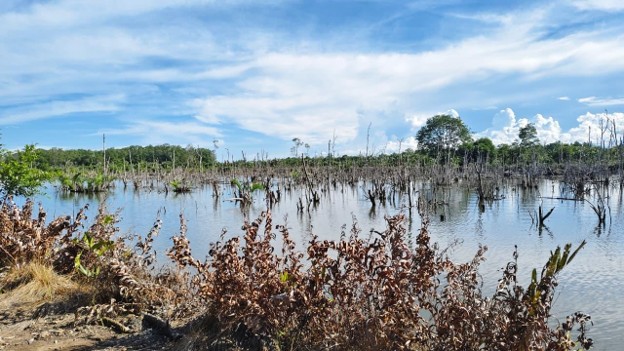
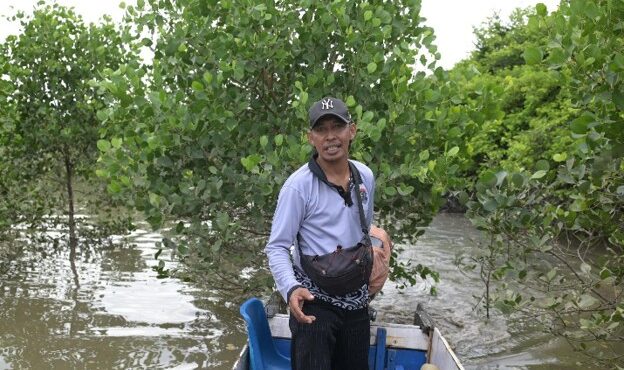
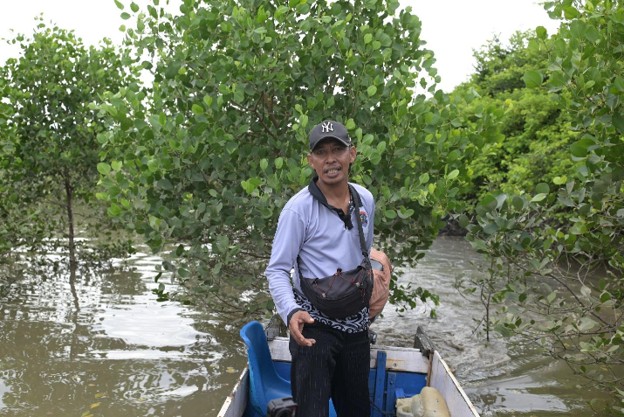
For Bachtiar, a local fishpond farmer, this reality was once part of everyday life.
“I used to be a fish pond farmer whose practices were not environmentally friendly,” he recalls. “But now I want to change my approach so that the benefits can be felt by future generations.”
Rethinking Mangrove Restoration
Mangroves play a critical role in protecting coastlines, supporting fisheries, and storing carbon. Yet, many restoration efforts have struggled to succeed. Conventional approaches often rely on planting large numbers of mangrove seedlings, usually of a single species —frequently overlooking the ecological conditions needed for mangroves to thrive. As a result, many planted mangroves fail to survive.
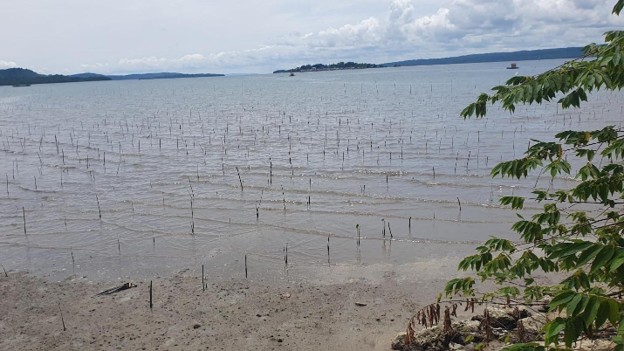
A more effective approach, Ecological Mangrove Restoration (EMR), is changing this narrative. Instead of focusing on planting, EMR emphasizes restoring the natural conditions that allow mangroves to regenerate on their own. This includes improving tidal flows, sediment balance, and the interaction between freshwater and seawater.
Equally important, EMR integrates local knowledge and ensures communities are involved from the start, creating a foundation for long-term sustainability.
A Farmer’s Transformation
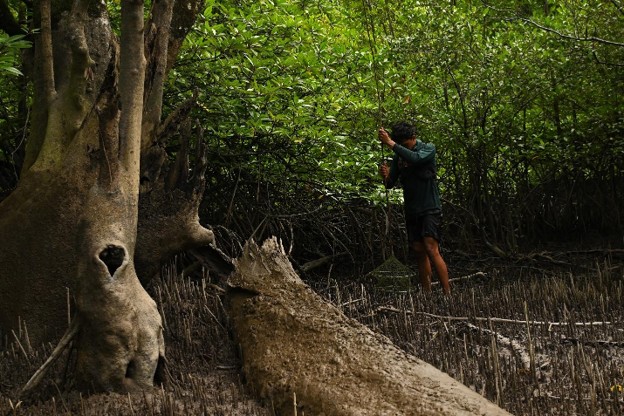
Bachtiar’s journey began when he joined a training on To Plant or Not To Plant, facilitated by Wetlands International Indonesia in 2023. Over eight months, he deepened both his practical and ecological understanding of mangrove rehabilitation: learning how pioneer mangroves enhance sediment accretion in abandoned ponds, how restoring tidal channels accelerates natural regeneration, how reference ecosystems guide species selection, and how to interpret tidal patterns.
Building on prior observations that mangroves naturally return in breached ponds, he began applying these principles in his own ponds. The results were gradual but powerful: mangroves began to regenerate naturally as soil accretion increased within the pond. Furthermore, marine life started to return as water quality improved.
Through this experience, he gained a new perspective: mangrove restoration is not about planting trees, but about working with nature.
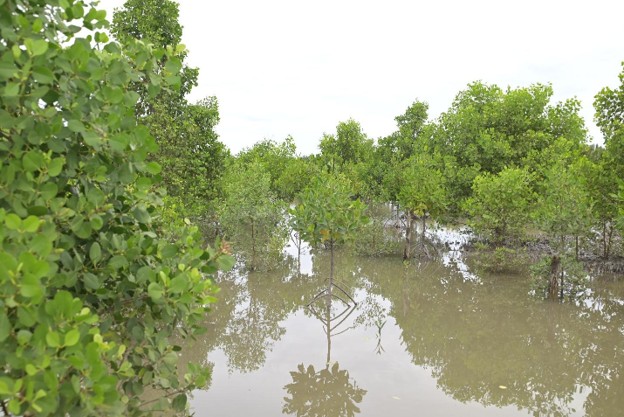
“When part of an aquaculture pond is allocated for mangrove restoration, water quality and soil conditions improve. This, in turn, supports aquaculture and fisheries activities,” he explains.
The benefits quickly extended beyond his pond. Fellow farmers and fishers in the village began to notice increased yields, particularly of crabs, which thrive in healthy mangrove ecosystems.
“From what I have seen, the results are extraordinary… because the mangroves grow well, naturally,” Bachtiar adds.
From Learner to Local Champion
What started as a personal experiment has grown into something much larger.
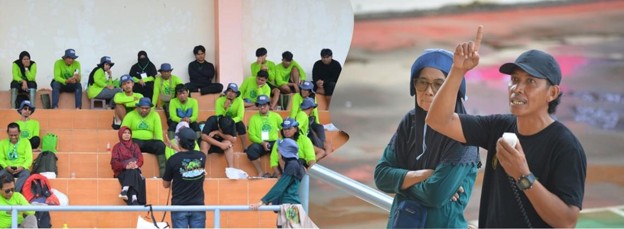
Bachtiar is now recognized as a local champion of mangrove rehabilitation. He actively shares his knowledge and experience with other communities across North Kalimantan, helping spread the principles of successful mangrove rehabilitation. By the end of 2023, seven neighboring farmers had visited his restored pond to learn from his experience. Since then, his role has expanded significantly: he has facilitated learning sessions for 39 university students, led silvofishery field schools for community groups supported by the BRGM and the World Bank–funded M4CR programme), and informally engaged with around 40 farmer groups (approximately 600 people in total). Through these efforts, Bachtiar has become a key local resource person in the silvofisheries field, promoting natural succession and sustainable aquaculture practices across his region.
By doing so, he is not only restoring ecosystems, but also strengthening community resilience and livelihoods.
His story highlights a powerful truth: lasting environmental change happens when communities are involved and their capacities are built.
Creating Lasting Impact
Mangrove restoration is not just an environmental effort, it is a social and economic opportunity. When communities see direct benefits, they become the strongest stewards of the ecosystems they depend on.
As the experience in North Kalimantan shows, restoration succeeds when:
- natural ecological processes are restored,
- local knowledge is valued, and
- communities are involved and directly benefiting, for example through increased yields or lower costs, and their capacities to apply innovative approaches to integrating mangrove restoration and aquaculture practice are strengthened.
Moreover, when people benefit, they are more motivated to protect what has been restored.
A Future Rooted in Nature
Bachtiar’s journey reflects a broader shift, from extractive practices to regenerative ones, from short-term gains to long-term sustainability.
By choosing to restore rather than exploit, he is helping to reshape the future of coastal communities, one mangrove at a time.
Author :